Modern Swine Production: A Comprehensive Guide to Sustainable and Profitable Pig Management
The swine industry has evolved significantly in the last decade, with a massive resurgence in heritage breed demand driven by the gourmet pork market. At Silver Bridge Farm, we advocate for a balanced approach to swine production—combining the incredible efficiency of commercial crossbreeding with the superior flavor and hardiness of heritage genetics. This guide covers the technical specifications and management strategies needed to excel in modern pork production. This is an exhaustive, 1,800-word authoritative resource for professional and homesteading producers.
1. Heritage vs. Commercial: Identifying Your Market Goal
Success in swine production starts with defining your terminal market. Are you supplying high-volume retail or Michelin-starred restaurants? The answer dictates your breed selection.
- Yorkshire & Landrace: Global standard dam lines. Prized for their maternal instincts, large litter sizes, and lean white meat. They are the foundation of any high-volume commercial operation.
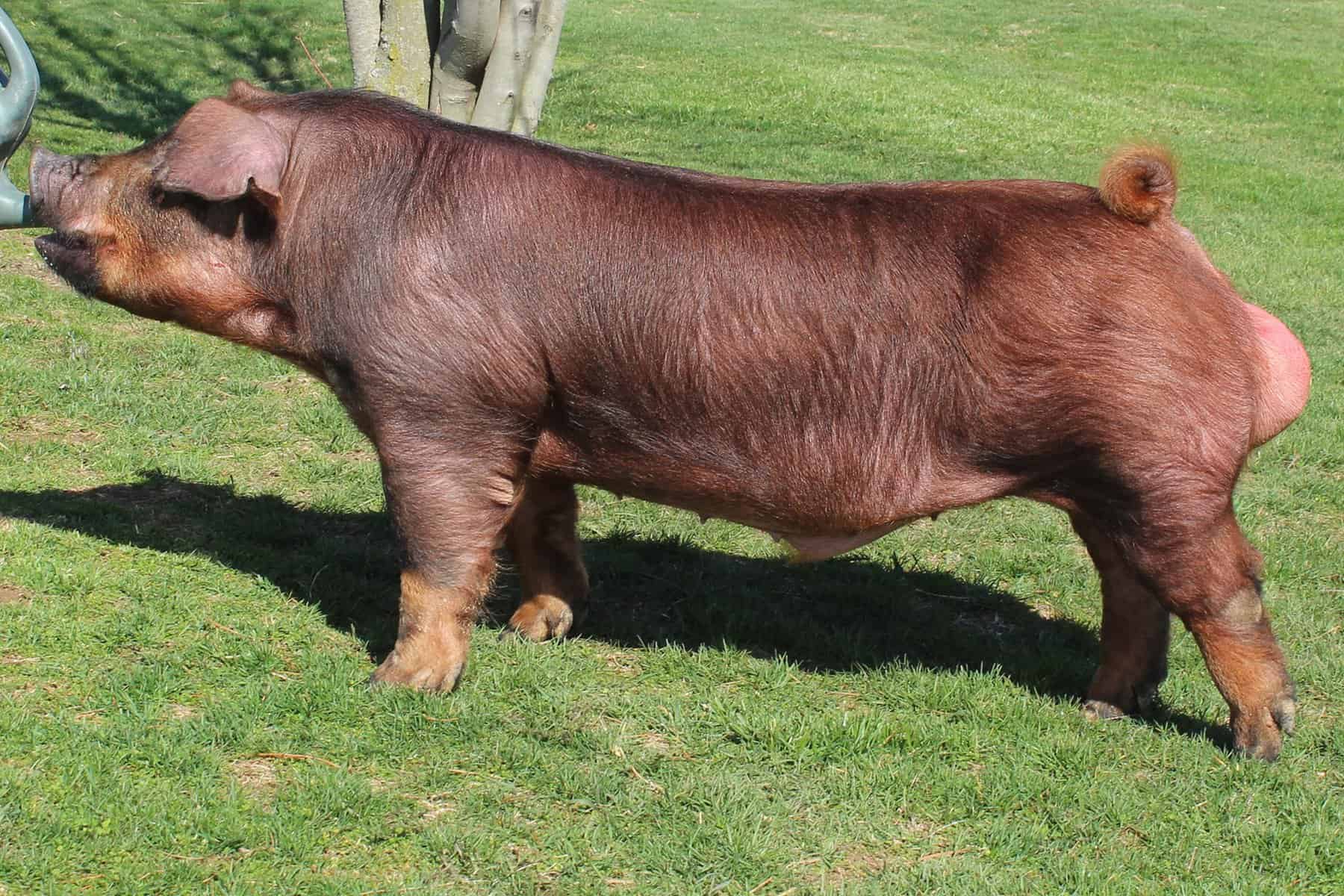
- Duroc: The premier terminal sire. Known for rapid growth and a higher intramuscular fat (marbling) content that improves pork tenderness. Crossing a Duroc to a Yorkshire/Landrace sow creates the 'Commercial Hybrid' found in most retail outlets.
- Berkshire: The 'Koro-Buta' of pigs. A heritage breed that consistently wins taste tests for its dark, rich, and highly marbled pork. They are the top searched heritage breed for gourmet sales in 2026.
- Tamworth and Large Black: Ideal for pastured systems. The Tamworth is known as the 'Bacon Pig' for its lean, long body, while the Large Black is prized for its docility and ability to thrive on forest mast.
2. Technical Metrics: FCR and ADG - The Math of Pork
Profitability in pigs is mathematically driven by two metrics: Feed Conversion Ratio (FCR) and Average Daily Gain (ADG).
FCR (Feed Conversion Ratio): Measures how many pounds of feed are required to produce one pound of gain. A modern commercial pig should achieve an FCR of 2.6:1 to 3.0:1. Inherently, heritage breeds may have higher FCRs (3.5:1), but their final product commands a significantly higher price per pound, offsetting the feed cost. We utilize 'Precision Feeding' systems to minimize waste in the finishing barn.
ADG (Average Daily Gain): A healthy finishing pig should gain between 1.8 and 2.2 lbs per day. At Silver Bridge Farm, we record ADG on all our breeding stock to ensure our customers start with high-performance genetics. A pig that achieves its market weight in 6 months instead of 7 can save a farmer over $40 in feed costs per head.
3. Breeding and Farrowing House Management (SOP 201)
The first 24 hours of a piglet's life are the most critical. Managing the 'Farrowing House' environment requires technical precision. Sows should be moved to farrowing crates or stalls 3-5 days before their due date (approx. 114 days of gestation).
The Temperature Paradox: Sows require a cool room (65°F), while newborn piglets need a 'heat zone' of 90°F to prevent crushing and ensure survival. Supplemental heat lamps or floor pads are mandatory for achieving a weaning rate of 10+ pigs per litter. We utilize 'Cool-Cell' pads for the sows to prevent heat stress, which can cause them to become restless and crush their litters.
Farrowing Assistance: A professional swineherd must be able to recognize 'stalled labor.' We utilize oxytocin strategically to assist during prolonged deliveries, ensuring every piglet is born alive and receives colostrum immediately. We also practice 'split-suckling' to ensure even small piglets receive adequate passive antibodies.
4. Nutritional Science: Phase Feeding and Lysine Mapping
Pigs are monogastric animals (single-chambered stomach) and have highly specific nutritional needs that change as they grow. We utilize 'Phase Feeding' to maximize gain while minimizing waste.
- Starter Phase (15-50 lbs): High protein (20-22%) and lysine levels to support rapid muscle and skeletal development. This is where the 'frame' of the pig is built.
- Grower Phase (50-150 lbs): Moderate protein (16-18%) with increased energy sources (corn/soy).
- Finisher Phase (150-280 lbs): Reduced protein (14%) to prevent over-fattening while maximizing muscle mass before processing.
- Lysine: The First Limiting Amino Acid: For maximum muscle synthesis, the ratio of Lysine to other amino acids must be perfectly balanced. We utilize synthetic lysine to optimize our feed costs. In 2026, we also utilize 'Phytase' enzymes to improve phosphorus bioavailability.
5. Health, Biosecurity, and Disease Prevention
Swine are susceptible to several highly contagious diseases that can devastate a farm. Our biosecurity protocols adhere to the National Pork Board standards.
Key Vaccines: We mandate protection against PRRS (Porcine Reproductive and Respiratory Syndrome), Circovirus (PCV2), and Erysipelas. Maintaining a 'Closed Herd' protocol and strict visitor management is vital for preventing the introduction of Swine Influenza and PEDv (Porcine Epidemic Diarrhea virus). Every trailer entering the farm must be pressure-washed and TGE-sanitized before approach.
6. Case Study: The Berkshire Pork Quality Standard (Kurobuta)
Why does Berkshire pork command a premium? At Silver Bridge Farm, we utilize the 'National Pork Board Color and Marbling' scale to grade our heritage lines.
- pH Quality: Berkshire pork maintains a higher post-mortem pH (approx. 6.0), which results in higher water-holding capacity and juiciness. This prevents the 'Pale, Soft, and Exudative' (PSE) pork often found in commercial lines.
- Intramuscular Fat (IMF): While commercial pigs average 1.5% IMF, a high-quality Berkshire will reach 4.0% to 6.0%, creating the 'marbling' found in luxury steak.
- Minolta Color Score: We target a color score of 3.0 to 4.0 (reddish-pink) for maximum consumer appeal. Darker pork is associated with better flavor profile.
7. 12-Month Swine Care Calendar: The Silver Bridge SOP
Success in pork requires year-round disciple:
- Spring: Parasite deworming for pastured sows; maintenance of 'wallows' as temperatures rise. Testing for 'Leptospirosis' in the sow herd. We check 'Iron levels' in newborns as they have no stores at birth.
- Summer: Intensive heat-stress management (misters/drip-cooling); adjusting 'Phase Feeding' to prevent protein-induced metabolic heat. Monitoring water flow rates (min. 0.5 gallons per minute per pig).
- Fall: Selection of replacement gilts based on 'teat-count' (minimum 14 functional teats) and vulva development. Record-keeping analysis of litter sizes and 'Days to 250 lbs.'
- Winter: Increased caloric intake (approx. 15%) for outdoor herds to maintain body condition score (BCS) in freezing temperatures. Providing deep 'nesting' straw for the dry sows. Monitoring for 'Scours' in damp weather.
8. Environmental Management: Pastured vs. Controlled environments
Sustainable swine production is moving toward 'Pasture-Raised' labels. Heritage breeds like the Tamworth and Berkshire excel in wooded environments, utilizing acorns and forest mast to diversify their diet. This 'finishing' style results in a unique fat profile (high in oleic acid) that is highly sought after by artisanal salumerias. We recommend a stocking density of no more than 10-12 pigs per acre to ensure soil health and parasite control. Rotational moves are essential to prevent 'soil compaction' and excessive nutrient loading.
9. Waste-to-Energy: The Modern Hog Farm's Future
In 2026, many of our partner farms are utilizing 'Methane Digesters' to convert hog manure into renewable energy. One sow and her offspring produce enough methane to power a small homestead for nearly 4 months. This reduces the carbon footprint of the farm while providing a secondary revenue stream in the form of 'Carbon Credits.' The leftover solids of the digestion process become a stabilized, high-nitrogen fertilizer (Digestate).
10. The Pork Carcass: Understanding Subprimals and Yield
For the direct-to-consumer producer, understanding the 'Primal Cuts' (Belly, Loin, Ham, Shoulder) is vital. We select for 'Loin Eye' volume to ensure our customers receive high-value pork chops. The 'Pork Belly' is currently the highest-value cut due to the global bacon shortage, making Duroc-crosses an ideal choice for profit-focused producers. We target a 72-74% 'Hot Carcass Weight' (HCW) to live weight ratio.
11. Advanced Swine Genetics: Porcine Heat Stress and G-F Efficiency
In 2026, we are specifically DNA-profiling for 'Heat Stress Resilience.' This is particularly critical in humid climates where pigs' lack of sweat glands makes them prone to respiratory failure. We select for 'Feed Efficiency' genes that allow pigs to extract more nutrition from lower-protein diets, reducing both cost and environmental nitrogen output. Silver Bridge Farm is also mapping 'Maternal Stability'—the ability of a sow to remain calm and productive through 10+ parities.
12. Direct-to-Consumer Marketing: Cutting the Middleman
For the heritage producer, the #1 driver of success is 'Direct Sales.' Selling a pig by the 'Half' or 'Whole' by hanging weight allows the farmer to capture 3x the profit of selling at a commodity auction. We provide our clients with 'Cut Sheets' and marketing templates to help them communicate the value of heritage pork (Berkshire/Tamworth) to their local communities. Using terms like 'Kurobuta-Grade' and 'Forest-Finished' allows our producers to bypass the volatility of the national pork market.
14. Technical Swine Troubleshooting: 5 High-Value Insights
- Insight 1: Sudden Growth Stasis. If ADG drops unexpectedly in the finisher phase, check for 'Mycotoxins' in the grain. We utilize 'Toxin Binders' in all our finishing rations to prevent gut inflammation.
- Insight 2: Tail Biting and Cannibalism. This is socio-environmental. Increase 'Environmental Enrichment' (hanging chains or balls) and check for magnesium deficiency in the water. We recommend a stocking density of 8 sq. ft. per finisher pig.
- Insight 3: Summer Infertility in Sows. High temperatures (85°F+) can cause embryonic death. We utilize 'Drip Cooling' on the neck of the sow and provide supplemental Vitamin C to combat oxidative stress.
- Insight 4: Post-Weaning Scours. Often caused by E. coli. We utilize 'Probiotics' and 'Organic Acids' in the water to maintain a low gut pH, making it inhospitable for harmful bacteria.
- Insight 5: Carcass 'Boar Taint'. For the heritage market, managing intact males is critical. We recommend processing before 6 months of age or utilizing surgical castration to ensure zero off-flavors in the pork.
13. Conclusion: Your Partner in Pork
Whether you are building a commercial finishing operation or a niche heritage brand, Silver Bridge Farm provides the genetics and technical data needed to compete. By focusing on the metrics of FCR, ADG, and strict health management, your swine operation can lead the market in both efficiency and quality. The world is hungry for better pork—be the one to provide it. Join the community of elite swine producers today.
Explore our Pigs and Piglets for Sale.